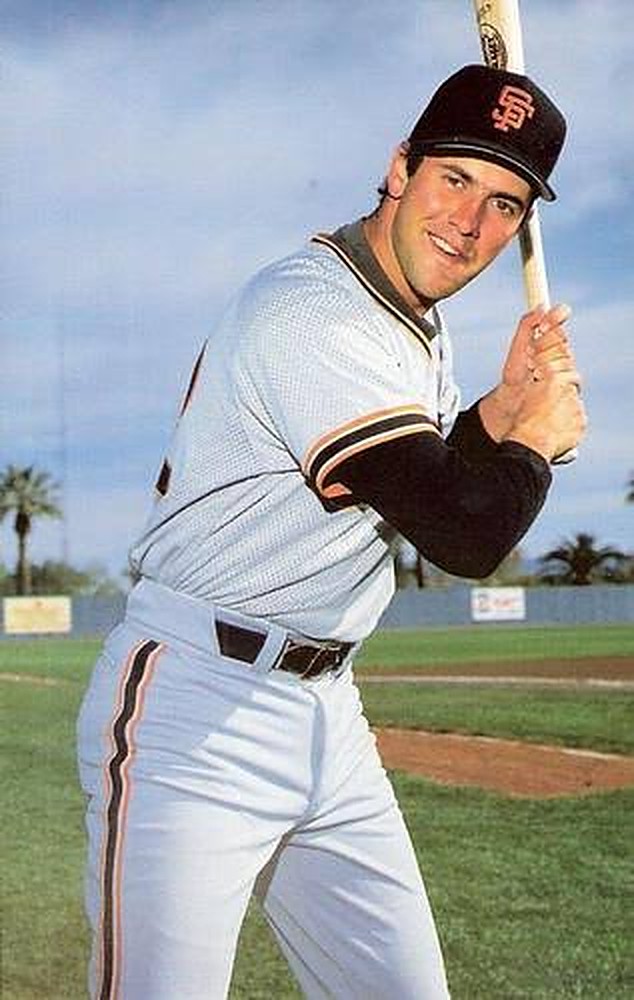
Will “The Thrill” Clark
The sweetest swing Candlestick ever saw, a scowl full of eye black, and the October night he owned Wrigley Field.
The Will Clark Story
Some guys you root for. Will Clark you kind of belonged to. He showed up in 1986 with eye black smeared halfway down his cheeks, a swing that looked like it was drawn by hand, and a mouth that never once stopped running, and for eight years he was the reason a lot of us kept making the drive out to Candlestick even when the wind was trying to take your hat into the bay.
He was a New Orleans kid, born March 13, 1964, who grew up in Gentilly and broke Rusty Staub's single season home run record at Jesuit High as a junior. The Royals drafted him in the fourth round in 1982 and he turned them down. He didn't think he was ready. So he went to Mississippi State instead, and that's where the legend really starts.
At State he hit alongside Rafael Palmeiro, and the two of them were Thunder and Lightning, which is a great nickname for two guys who couldn't stand each other. Clark played for the U.S. team at the 1984 Olympics in Los Angeles and led that club at .429 over the five game tournament at Dodger Stadium. In 1985 he won the Golden Spikes Award as the best amateur player in the country, took the Bulldogs to the College World Series, and made the all tournament team. Then the Giants took him second overall. He homered in his first pro at bat at Fresno, because of course he did.
Nobody expected him to make the big club out of spring training in 1986. He was a non roster invite. Roger Craig just couldn't find a reason to take him out of the lineup, and Clark beat out 14 year veteran Dan Driessen for the job. On April 8 in the Astrodome he took his first big league swing against Nolan Ryan and hit it 420 feet into the center field seats. Bob Brenly started calling him the Thrill not long after, and it stuck forever. An elbow injury from a collision with Andres Galarraga cost him almost two months, and he still finished fifth in the Rookie of the Year vote.
Then 1987 happened. Clark hit .308 with 35 homers and 91 RBIs, the Giants grabbed first place in August and never let go, and San Francisco won its first division title since 1971. He hit .360 in the NLCS against the Cardinals. We lost that series in seven and I'm still a little mad about it. In 1988 he led the National League with 109 RBIs and 100 walks, made his first All Star team, and finished fifth in the MVP voting for the second straight year.
And 1989. Him and Kevin Mitchell, the Pacific Sock Exchange. Clark hit .333 with 23 homers and 111 RBIs, led the league with 104 runs, and lost the batting title to Tony Gwynn on the final day of the season, in San Diego, with the Padres crowd booing him. He finished second in the MVP race to Mitchell. Then he went to Wrigley and played the best five games I've ever seen a Giant play in October: 13 hits in 20 at bats, two homers, the pennant clinching single off Mitch Williams, NLCS MVP. The World Series against the A's was a mess. The earthquake hit before Game 3, he was fighting tonsillitis, and the A's swept us. Doesn't change what he did to the Cubs.
In January 1990 the Giants made him the highest paid player in baseball, four years and $15 million. Al Rosen said he played like a Hall of Famer. Then his body started fighting him. He played all of 1990 on a left foot with Morton's neuroma and didn't tell anybody but the trainer, which is the most Will Clark thing imaginable. They fixed the foot and the tonsils that winter, and in 1991 he hit .301 with 29 homers and 116 RBIs, led the league in slugging and total bases, won the Gold Glove he'd openly said he wanted more than any hitting award, and took home his second Silver Slugger.
He made the All Star team every year from 1988 through 1992, voted in as the starter at first base every time. He also set a San Francisco record with 320 straight games played from September 1987 to August 1989. The power dipped in 1992 and 1993 as pitchers worked around him and the injuries piled up, and in 1993, with Barry Bonds in left, the Giants won 103 games and still missed the playoffs on the last day. That was his last season in orange and black. The Giants offered three years at less than $15 million. He wanted to stay. He said so out loud. It didn't happen.
Texas gave him five years and $30 million to replace, who else, Palmeiro. He hit .329 in 1994 and made a sixth All Star team, this time for the American League. He played through a broken left elbow in 1995, hit .326 in 1997, and drove in 102 runs in 1998 as the Rangers won the AL West for the second time in three years. Then Texas brought Palmeiro back and Clark went to Baltimore, partly to be near Johns Hopkins for his son Trey, who'd been diagnosed with autism. He got his 2,000th hit as an Oriole on June 15, 1999.
The last act is the one people forget. At the 2000 trade deadline Baltimore sent him to St. Louis to cover for an injured Mark McGwire, and at 36 he hit .345 with 12 homers in 51 games. He hit a three run homer off Tom Glavine in the NLDS and led the Cardinals at .412 in the NLCS. Then he walked away. He could still hit and he knew it. He went home to help Lisa raise the kids, and he's been a loud voice for the autism community ever since.
Cooperstown never came. He got 4.4 percent of the writers' vote in 2006 and fell off the ballot after one try, and the Today's Game Era committee passed on him for the 2017 class. The Bay Area took care of him anyway. The Bay Area Sports Hall of Fame inducted him in 2007, he went up on the Giants Wall of Fame with the inaugural class in 2008, and on July 30, 2022, the Giants retired number 22 at Oracle Park and hung it between Monte Irvin's 20 and Willie Mays' 24. He called that day his Hall of Fame. I'll take his word for it.
He never really left, either. After years advising the Diamondbacks' coaches in spring training and serving as a Giants community ambassador from 2009 to 2015, he's listed in 2026 as a Special Assistant in the Giants' executive office. Every so often you'll catch him at the ballpark, and somebody in the next section will start in about the grand slam at Wrigley like it was last week.
What He Meant to Us
If you grew up a Giants fan in the late 80s, Will Clark wasn't just a good player on your team. He was the team. He was the heart and soul of those clubs from the day he showed up in 1986 until the Giants let him walk to Texas after the 1993 season, and I still haven't totally made peace with that one.
The swing is what everybody talks about first, and they should. It's one of the sweetest left handed swings I've ever seen, so smooth it almost looked lazy until the ball came off the bat. When he was locked in he'd sit up near the top of the league in batting average, spray line drives everywhere, and make good pitchers look like they were throwing batting practice. He was one of the best pure hitters you'll ever see. And people forget he could pick it at first base too. He won a Gold Glove in 1991 and he earned it.
Then there was the intensity. Clark played every inning like somebody had insulted his mother. The eye black, the glare, the jaw going the whole time. Some guys you respect. Clark you loved. If you were a Giants fan, you loved Will Clark, period.
His masterpiece was the 1989 NLCS against the Cubs. Game 1 at Wrigley he homered off Greg Maddux in the third and then hit the grand slam off him in the fourth, so it was actually two homers that night, not one, and the slam is the one everybody remembers. He hit .650 for the series and won the MVP. And then Game 5 at Candlestick, eighth inning, tie game, two outs, bases loaded, and the Cubs bring in Mitch Williams. Clark lines the two run single right up the middle. That's the hit that sent the Giants to the World Series. If I had to pick one swing that defines him, that's the one.
What came next still stings. The A's were a juggernaut. Canseco, McGwire, Rickey, Stewart, Eckersley at the back end, just absolutely stacked, and the earthquake hit before Game 3 at Candlestick. The Giants got swept, and that was the closest Will ever got to a ring. He never won a World Series, and that's one of the real injustices of my sports life.
One more story, because no Will Clark page is complete without it. July 24, 1988, Giants at Busch Stadium. Clark's on first in the eighth, Candy Maldonado hits a grounder to Ozzie Smith, and Clark comes into second hard to break up the double play. It wasn't the nicest slide in the world, I'll admit that. Jose Oquendo didn't like it, got into him, and Clark came up swinging at whoever was closest. He basically tried to take on the whole Cardinals infield by himself. Ozzie got a shot in on him from behind, and then here comes Maldonado flying in from first with a diving right hand that caught Ozzie in the mouth. And watch Bob Brenly in that video. He wanted a piece of Ozzie, guys were standing in between them, and he had plenty to say to him. Clark and Oquendo got tossed, the Giants won 5 to 0, and it's still one of the best brawls in Giants history. That was Will Clark in one afternoon. He wasn't backing down from anybody.
Why He Was Clutch
Clutch is a word people throw around. With Clark it's just the box score. Put him in October against the Cubs in 1989 and he went 13 for 20, homered twice off Greg Maddux in Game 1, drove in six in that one game, and then in Game 5, tied at one in the eighth inning with the bases loaded and two outs, he took Mitch Williams up the middle for the pennant. You don't get a bigger at bat than that in the old ballpark, and he didn't flinch.
It wasn't one week, either. The first time he ever swung the bat in the big leagues he took Nolan Ryan deep, and he kept beating Ryan for years, six homers off him, more than anybody. He hit .360 in the 1987 NLCS and homered in the Game 2 shutout in St. Louis. Thirteen years later, nearly done, he hit a three run homer off Tom Glavine in the first inning of an NLDS game to flip a 2 to 0 deficit. The big stage never shrank him. It seemed to wake him up.
And I'll say the homer part out loud. Yes, the 1989 World Series was rough for him. He was sick, the earthquake had turned the whole Bay Area upside down, and the A's were a buzzsaw. I don't care. When the Giants needed one swing to get back to the World Series for the first time since 1962, he was the guy at the plate, and he got it done.
Clutch Moments
- April 8, 1986
First swing, Nolan Ryan, gone
In his big league debut at the Astrodome, Clark came up with one out in the top of the first against Nolan Ryan. On his first major league swing he put a letter high fastball 420 feet into the center field bleachers for a 1 to 0 Giants lead. San Francisco won 8 to 3, and the kid from New Orleans had started a career long habit of hurting Ryan, six homers off him in all.
- October 7, 1987
Two run shot off John Tudor in St. Louis
The Giants had dropped Game 1 of the 1987 NLCS at Busch Stadium. In the second inning of Game 2, with Candy Maldonado aboard and one out, Clark took John Tudor deep for a two run homer. The Giants won 5 to 0 to even the series, and Clark finished the NLCS hitting .360.
- July 24, 1988
Taking on the whole Cardinals infield
Busch Stadium, eighth inning. Clark was on first when Candy Maldonado bounced one to Ozzie Smith, and Clark came in hard on Jose Oquendo at second to break up the double play. Oquendo got into him, Clark came up swinging, and a pile of Cardinals closed in. Ozzie popped him from behind, and Maldonado sprinted over from first and landed a diving punch that split Ozzie's lip. Clark and Oquendo were ejected. The Giants won 5 to 0.
Clark didn't apologize for the slide. “If I have the opportunity to do it again, I'm going to go in there the same way,” he said afterward, and Roger Craig cracked that it was the fastest he'd ever seen Maldonado run from first to second.
- October 4, 1989
Grand slam off Greg Maddux at Wrigley
Game 1 of the 1989 NLCS might be the best night any Giant has ever had in October. Clark doubled home Brett Butler in the first, homered off Greg Maddux in the third, and then in the fourth, after Maddux intentionally walked Butler to load the bases with two outs, Clark hit the first pitch for a grand slam that made it 8 to 3. He finished 4 for 4 with a walk, four runs scored and six RBIs in an 11 to 3 win.
- October 9, 1989
The single that won the pennant
Game 5 at Candlestick, Giants up three games to one. Clark led off the seventh with a triple and scored the tying run on Kevin Mitchell's sacrifice fly. In the eighth, Mike Bielecki walked Candy Maldonado, Brett Butler and Robby Thompson with two outs, and the Cubs brought in Mitch Williams. Clark singled up the middle to score two and make it 3 to 1. The Cubs got one back in the ninth, Ryne Sandberg grounded out to end it, and the Giants were going to the World Series for the first time since 1962.
- October 5, 2000
One more October swing, off Tom Glavine
Thirteen years after his first NLCS, a 36 year old Clark was a Cardinal filling in for Mark McGwire. Atlanta scored twice in the top of the first of NLDS Game 2. In the bottom half, with one out and Edgar Renteria and Jim Edmonds aboard, Clark hit a three run homer off Tom Glavine to put St. Louis in front for good in a 10 to 4 win.
- July 30, 2022
Number 22 goes up for good
Before a Saturday game at Oracle Park, the Giants retired Clark's number 22 and hung it between Monte Irvin's 20 and Willie Mays' 24 in the left field corner. Bonds, Mitchell, Buster Posey, Bruce Bochy and Robby Thompson were there. Clark told the crowd it was his Hall of Fame, and Mike Krukow said he made it cool to be a Giants fan again.
The Highlights
What They Said About Clark
“You were a tough person to like when I played for the Pirates. … It was great to play against you, but it was better to be your teammate.”
“I regard a lot of our guys as indispensable, but if I had to pick one, it would be Will Clark. In addition to his natural ability, he has the charisma that puts people in the park.”
“The thing about it is, the guy knows he can hit. A lot of people on the other side will look at Will Clark and see that he's got a few mannerisms, he's got a little cockiness about him, so they don't like him. But they would have to know Will Clark like I do to appreciate him.”
“I don't see cockiness in him. I see youthful exuberance. You like to see that in players.”
“He carries his personality to the plate. He just knows he's going to get a hit.”
“Will's main asset is a tension-free swing. He doesn't muscle the ball like most power hitters. Will uses leverage extremely well. He's a hitter, not a slugger, and what he's doing now shouldn't come as a surprise.”
“Will Clark is the premier player in the game and he earns every cent. He plays like a Hall of Famer, and he should be paid like one.”
Career Stats
| Year | Team | G | AB | R | H | 2B | 3B | HR | RBI | SB | BB | AVG | OBP | SLG | OPS |
|---|---|---|---|---|---|---|---|---|---|---|---|---|---|---|---|
| 1986 | SF | 111 | 408 | 66 | 117 | 27 | 2 | 11 | 41 | 4 | 34 | .287 | .343 | .444 | .787 |
| 1987 | SF | 150 | 529 | 89 | 163 | 29 | 5 | 35 | 91 | 5 | 49 | .308 | .371 | .580 | .951 |
| 1988 | SF | 162 | 575 | 102 | 162 | 31 | 6 | 29 | 109 | 9 | 100 | .282 | .386 | .508 | .894 |
| 1989 | SF | 159 | 588 | 104 | 196 | 38 | 9 | 23 | 111 | 8 | 74 | .333 | .407 | .546 | .953 |
| 1990 | SF | 154 | 600 | 91 | 177 | 25 | 5 | 19 | 95 | 8 | 62 | .295 | .357 | .448 | .805 |
| 1991 | SF | 148 | 565 | 84 | 170 | 32 | 7 | 29 | 116 | 4 | 51 | .301 | .359 | .536 | .895 |
| 1992 | SF | 144 | 513 | 69 | 154 | 40 | 1 | 16 | 73 | 12 | 73 | .300 | .384 | .476 | .860 |
| 1993 | SF | 132 | 491 | 82 | 139 | 27 | 2 | 14 | 73 | 2 | 63 | .283 | .367 | .432 | .799 |
| 1994 | TEX | 110 | 389 | 73 | 128 | 24 | 2 | 13 | 80 | 5 | 71 | .329 | .431 | .501 | .932 |
| 1995 | TEX | 123 | 454 | 85 | 137 | 27 | 3 | 16 | 92 | 0 | 68 | .302 | .389 | .480 | .869 |
| 1996 | TEX | 117 | 436 | 69 | 124 | 25 | 1 | 13 | 72 | 2 | 64 | .284 | .377 | .436 | .813 |
| 1997 | TEX | 110 | 393 | 56 | 128 | 29 | 1 | 12 | 51 | 0 | 49 | .326 | .400 | .496 | .896 |
| 1998 | TEX | 149 | 554 | 98 | 169 | 41 | 1 | 23 | 102 | 1 | 72 | .305 | .384 | .507 | .891 |
| 1999 | BAL | 77 | 251 | 40 | 76 | 15 | 0 | 10 | 29 | 2 | 38 | .303 | .395 | .482 | .877 |
| 2000 | BAL | 79 | 256 | 49 | 77 | 15 | 1 | 9 | 28 | 4 | 47 | .301 | .413 | .473 | .886 |
| 2000 | STL | 51 | 171 | 29 | 59 | 15 | 1 | 12 | 42 | 1 | 22 | .345 | .426 | .655 | 1.081 |
| Career | 1976 | 7173 | 1186 | 2176 | 440 | 47 | 284 | 1205 | 67 | 937 | .303 | .384 | .497 | .881 |
Regular season. Highlighted rows are his Bay Area seasons. Scroll the table sideways on a phone.